
A Liturgy for a New Name
some important updates for those who've followed my story

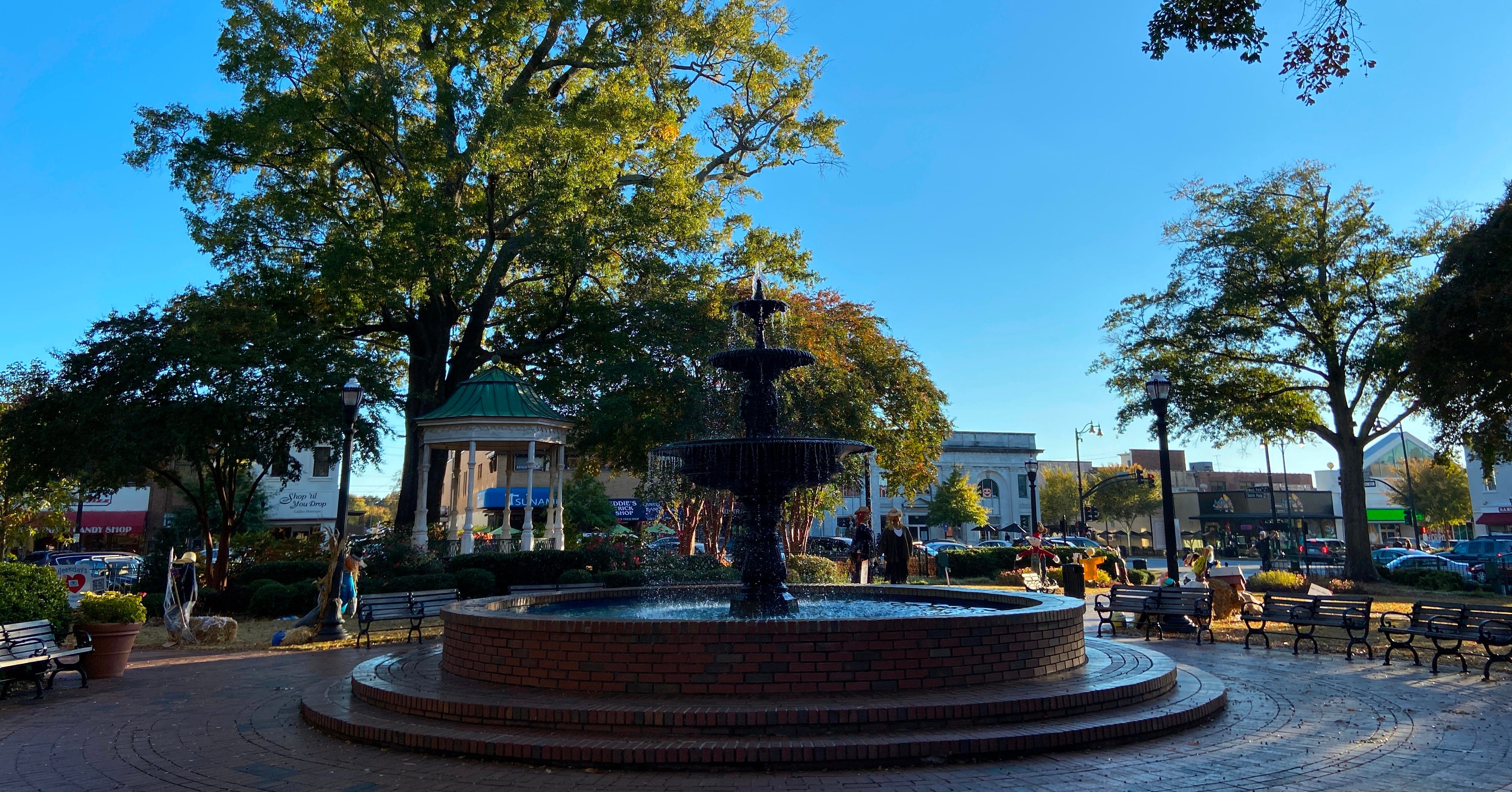
Shortly after the sun went down on Christmas Day this year, my family and I sat together and prayed for over an hour on the grass in the middle of the Marietta Square, where I grew up in Georgia. Panning our heads around in the warmer-than-usual December air, we remarked on the plethora of memories which bathed this place.
My church from childhood to adulthood, Stonebridge, was in my field of view. The other church where I went to preschool wasn’t far, and the coffee shop where I had my first date was right around the corner. My dad’s studio, where I worked and even lived during COVID, was within walking distance. The hospital where I was born was less than a mile away. And around this very patch of grass where we were sitting, I was photographed by the newspaper as a toddler blowing bubbles with my mom. Somehow, we both made it onto the front page.
Sitting in this intimately storied spot, my parents, my sister and I had gathered to participate in a sort-of renaming and dedication ritual for me. My dad read a liturgy recounting the many characters in The Bible who took on new names as they stepped into God’s surprising redirection of their life: Sarah, Abraham, Jacob, Peter, Paul. And then my parents, my sister Haviland, and I each prayed aloud for a while, and culminated it all with a little anointing with water from the park fountain on my forehead.
The reason we were doing all of this had been a long time coming.
Ever since I was very young, I’ve experienced gender dysphoria—the persistent feeling of dissonance between the gender you were born into and the way that you yearn to be truly known and understood by others. It started when I was 5 or 6, as a desperate recurring prayer before bed that I might wake up as a girl the next day. As I got older, that feeling stuck around like a low static hum in the back of my mind—a radio station never quite properly tuned, a mix of melancholy and the lurking sense that I never felt integrated and whole. I’ll spare you the lengthy backstory; suffice to say, it was a hard thing to carry—and the source of much shame and wrestling—for most of my growing up. And upon becoming an adult, it didn’t just “go away” the way that I’d sometimes assumed it would. Instead, eventually it became a reality with undeniable ripples in all the most significant parts of my life.
My family found out just over 3 years ago, and since then they’ve each been on their own journeys of wrestling and praying and understanding. And personally, it’s taken years for me to figure out how to make sense of it all on many levels—relationally, theologically, individually, spiritually. Over the last few years in particular, I spoke to dozens of trusted spiritual mentors, met with a few counselors, wrote hundreds of pages of reflections on my childhood, read tomes of research and philosophy from many perspectives, and tried to wrap my head around what to do with this reality that I hadn’t been able to ignore.
So much of my early approach came from the perspective of how these “issues” impacted people I loved and the life I wanted, and how I could minimize that impact with a solution. I don’t think that approach was entirely wrong; we do exist and even find our identities in relationship to God and other people, and you can’t “find yourself” in a vacuum. Even so, at some point I had to reckon with how much I was orienting all my decisions around the self-preserving desire to avoid rocking the boat. I knew that I wanted to love people well and not just serve myself, but deep down, I think I was also afraid that disappointing other people meant I was disappointing God. It felt, at that time, like there were certain decisions that would put me unambiguously on the “wrong path,” and others that would mean I was “still righteous”—and it’ll probably come as no surprise to you that these were highly correlated to what the community around me would think, far more than God.
It was a long and tumultuous road to reach a place of acceptance, and a belief in some kind of spiritual calling to be brave enough to be fully known both by God and people. I’d tried every other option, every other workaround, and found that it required a level of mental gymnastics and pretending that would eventually crush me—and not just me, but my relationship with God, and other people too. Even many of the people closest to me could see it; they could see how my lack of honesty with myself was leaving them with less and less stable ground to stand on. Don’t get me wrong: honesty doesn’t always mean “just go live your best life.” But I do believe refusing to properly come to terms with things that are core to your being can and will keep you from loving others well.
And when I did reach a place of grace with myself, and with the unique ways God had equipped me to serve the world, it felt freeing. Not just because I was somehow “my true self,” but because I was loved enough to love freely.
I’m hyper-aware as I write this that reading all of it may be pretty disorienting for many people. In recent years, and throughout my life, I have been graciously surrounded by so many kind folks who supported and believed in me—but also supported and believed in “my story.” That story encompassed so many things: my faith, my parents, my time at L’Abri, my marriage, my YouTube channel, my movies…and there was (and continues to be) so much that was truly beautiful throughout it all, even in the midst of the pain and turmoil behind the scenes.
Now, though, my story has changed. And yes, parts of this change have been hard, and sad, and confusing. There has been real loss and heartbreak.
It’s difficult when writing something like this to discern which details are necessary to share with others and which ones are important to keep private. Still, because I want to avoid being unfairly cryptic: Yes, some time ago now, my marriage tragically ended. First with a separation about 2 years ago, and then more officially about a year ago.
For a very long time, I was deeply ashamed of telling anyone about any of it. It wasn’t just that I was disoriented myself; it was that I felt the burden of disappointing others and their hopes for me.
I’m placing my trust in the person reading this not to jump to too many tidy or reductive conclusions, but suffice to say, it was all more complex than you’ll ever know from a short essay. Not all of it was simply connected to my gender; to call the situation complicated would be an understatement. But looking back, all I can see are two young people honestly trying their best to navigate that impossible balancing act of loving another person as you love yourself, all while honestly wrestling with tumultuous things about themselves that each had never taken seriously until the moment those things began to mix together. I see very little malice or wrongdoing—only lack of experience, a desperate attempt to love beyond limits, and a dash of naivety. And as much as there has been heartbreak and pain and wrestling and uncertainty, there has also been goodwill and the presence of the Holy Spirit, dying to self and forgiveness, and strange grace. I don’t mean to over-romanticize; these last couple of years have been the hardest of my life. They were hard for my family, and for many others too. But God is still here. And on my better days, I feel His empathy and grace in all of it.
It has taken me a long time to even be able to own the language of “transgender” and “trans woman” to describe myself. Our culture is so amped-up with anger and vitriol right now that even using these words has become something like “making a statement.” Simply being transgender is seen as overtly political, an idea which would probably be pretty laughable to those who know me in real life merely as an ordinary person just like anyone else. Still, for the same reason that I still own the label of “Christian” to accurately describe myself, even with whatever modern connotations it may bring, I think it’s important to reclaim these words in the midst of the noise.
Here’s the really important piece for you to know: For most of this last year, I have been going by she/her pronouns and the name Georgia. After many months searching for a name, Georgia was one suggested by happenstance by a thoughtful friend—and it immediately stuck. The initial meaning was obvious: it is a name that draws me to the roots of where I am originally from, grounding me in my identity as a southerner and a person who was loved well in the place where I grew up even though I don’t live there today. Because it’s where I grew up, I also liked that the word “Georgia” did not feel out of place in my family’s native vocabulary. Where an arbitrary name like “Chloe” or “Kate” would have come totally out of nowhere, Georgia felt instantly like—well, like home. And like one that had already been uttered often with love by my family long before it was mine.
The other significance of Georgia only dawned upon me recently: the Greek word that it comes from means “farmer,” or “earth-worker.” At first, this only ever struck me as sort-of random; lord knows, actual farming has never been my passion. But the more that I sat with it, the more that I realized farmers are those who commit to intimately knowing one particular place and invest in planting seeds there, cultivating those seeds until they grow and blossom as a bounty of fruit. And the more I thought about it, the more this sounded like both who I am and who I want to be. Well, spiritually anyway; you won’t catch me plowing any fields, probably ever, unless forced.
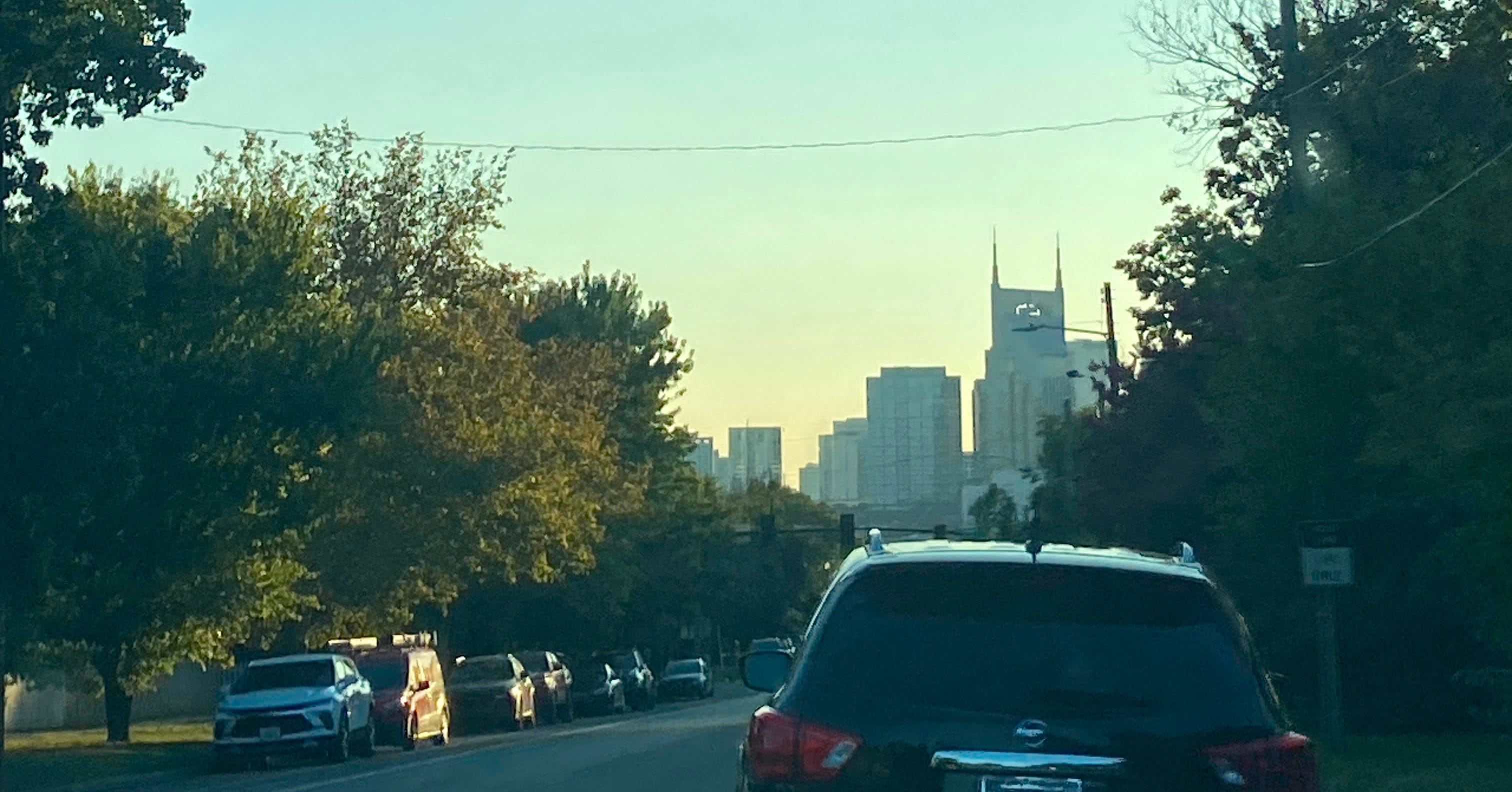
This call to stay in a place and plant seeds, though, has been one that has felt palpable these last few years in Nashville, and in particular since I started transitioning to life as Georgia. From the moment I started my transition, one spiritual call has echoed in my mind again and again: “Be someone who sticks around.”
“Sticking around” is pretty much what it sounds like. In a world as fractured as ours into separate universes (politically, ideologically, denominationally) I’ve been struck with conviction for a while that the only way out is through. If my life is as filled with the providence and kindnesses of God as I believe that it is, let that be shown through my faithful presence. Put simply, I’m here and I’m not going anywhere—in the relationships I have been given, in the artistic community surrounding me in Nashville, and in the big ol’ dysfunctional family that is the church.
I don’t mean to arrogantly portray myself as some sort-of ideal trans person who is perfectly tolerant of everyone and never gets offended or hurt or frustrated. That’s not me, I promise. Nonetheless, I like to think that on my good days, my commitment to “sticking around”—and even offering as much generosity for misunderstanding as I can—comes from a place of genuine affection for the church, for my fellow Christians, and for all that I believe we are and can be despite our messiness. Put simply, people of faith are still my people. I feel this strongly and unapologetically. Jesus is the lens through which I understand reality; it couldn’t be any other way. Those who view things through the lens of that same Jesus have so much more in common with me than whatever they don’t. And the same goes for other categories that I refuse to relinquish: Southerners are my people. Nashvillians (Nashvillagers?) are my people. L’Abri people are my people. LGBTQ people are my people, too. And those whom I have loved and been loved by deeply in the past are still my people.
Lest I ignore it to avoid rocking the boat: There are boundaries of dignity that I’m trying to maintain. One of those is that I am very willing to be in relationship with people with differing theological or ideological opinions (and those who simply don’t know what to make of it all!) but I do request that they at least honor my name and pronouns. I don’t necessarily think “affirming” or “non-affirming” are helpful categories—it’s all a little too black and white for me—but I do think the words “respectful” and “disrespectful” still hold real sway in a basic human way.
And so that’s where I’m at now. It’s hard not to tell this story in a way that falls into the most common cliches of a ‘coming out’ narrative; I lived my childhood in “repression,” eventually I “found myself” and “embraced who I really am,” thankfully my family accepted me, and now things are all perfect as ever and I’m “living my truth.” Or so the story is supposed to go.
The real truth is, I still feel like I’m on a journey—and in story language, ‘coming out’ was not the happy ending, it was the crossing of the threshold out of the Shire. The night that my family and I decided to have this renaming dedication, it was less to cement anything with overzealous closure and more to make sure that whatever I call myself, however I exist in the world and go forth on this mysterious road, my true identity is found in Christ. There was a time when I would have been unable to write a sentence like that without finding it trite and performative. But these days, it is a daily reality that I truly believe in. It is a prayer that I pray every morning.
And what I have found, since transitioning, is that I feel much more capable of giving and receiving love than I ever have before. This year, complex as it has been to find my footing again, has been littered with kindnesses and points of connection and empathy. Put simply, it has been filled with the fruit of the spirit enveloping me, even when I fumble and falter. It was fitting that my family held my renaming ceremony on Christmas Day, because in many ways, the receiving of my name—and everything that has happened this year—has felt like a gracious gift of delight.
If you’d like to hear more embodied and personal details of what my life looks like now, I’d invite you to read my recent Substack piece called “If Wrapped in Kindness.” It goes into depth about a new magazine columnist position with Sojourners I’ve been loving, working at a movie theater, and the rich faith community that surrounded me in 2025 and continues to surround me today.
There will also be, for some, questions about how exactly I’ve made sense of the theological/spiritual aspect here—and I certainly don’t begrudge honest wrestling, because I’ve been there myself. In my desire to meet those questions and how I’ve thought about some of them, I’ve been writing a series of essays on my other Substack (called Georgia In Her Mind) this year delving into “theology of trans experience.” These essays were in many ways as much for my own benefit as they were for anyone else, but hopefully they can meet some of that conversation for the curious.
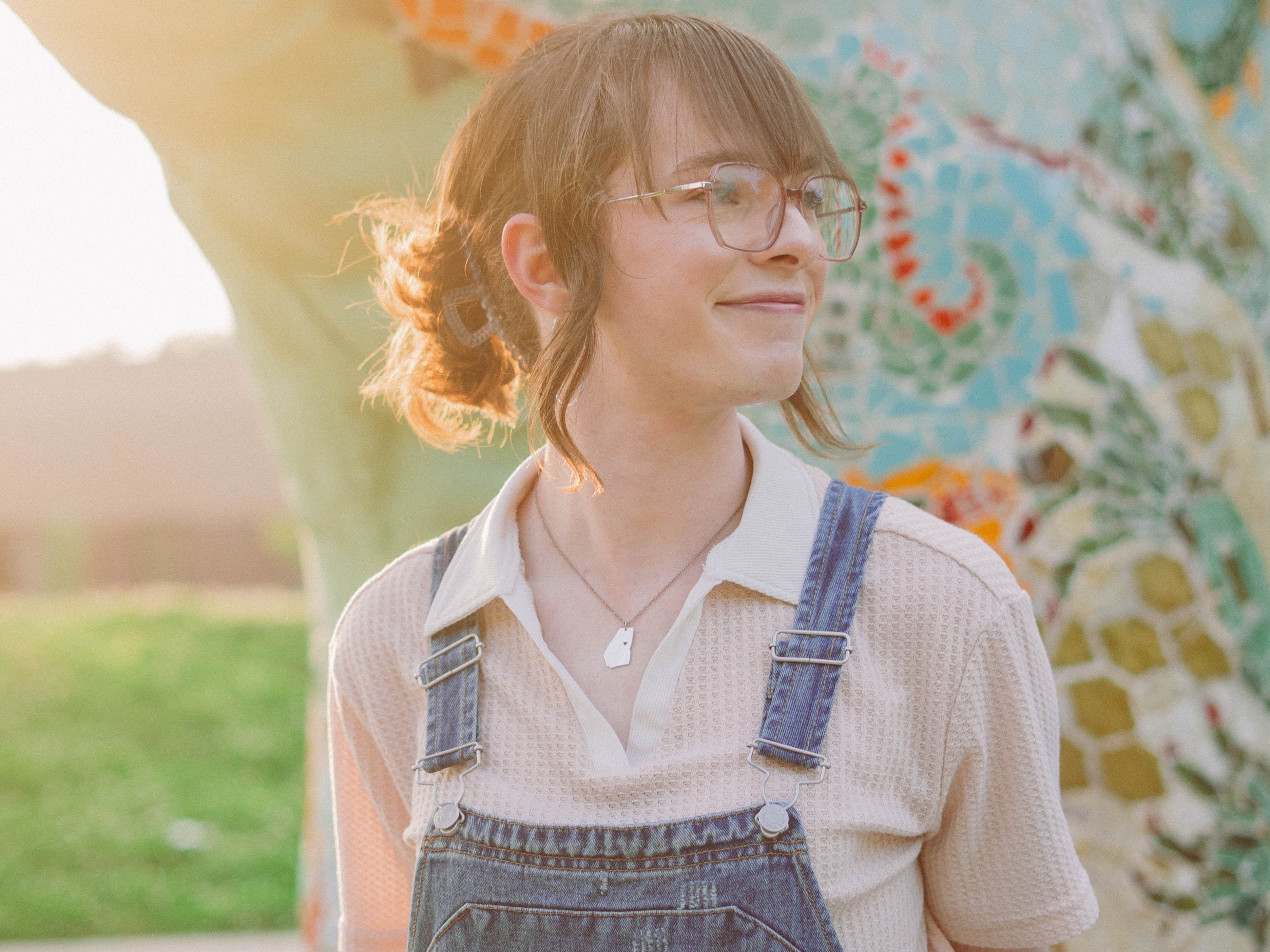
I’ll close this essay with something that has always been obvious to me, but often bears repeating: I am the same person I’ve ever been. If you like, I’m still the same song just played in a different key, or even the same radio station without the buzzy static. I believe that “trans woman” is the best way to describe how I approach the language of gender and the world around me today. But it’s also true that each of us is more mysterious and multidimensional than whatever helpful categories we might loosely fit. If you have loved or liked me, enjoyed my documentaries, or appreciated my thoughts and ponderings about faith and art, hospitality and beauty, theme parks and Muppets, all the way up until now…I hope you’ll stick around just like I am. I’m not going anywhere!
Warm wishes,
Georgia
 | A guest post by
|